Oracle Payables leverages Oracle Subledger Accounting to define the primary and secondary accounting methods used. The accounting method determines the types of accounting entries created for Payables transactions. For each accounting method, cash or accrual, you choose a ledger in which you will account for transactions.
Attention: Carefully consider these settings at implementation time because you cannot change them after accounting events occur (for example, after any invoice has been validated in your system.)
Set up your accounting method to create accounting entries in compliance with one of the following accounting methods:
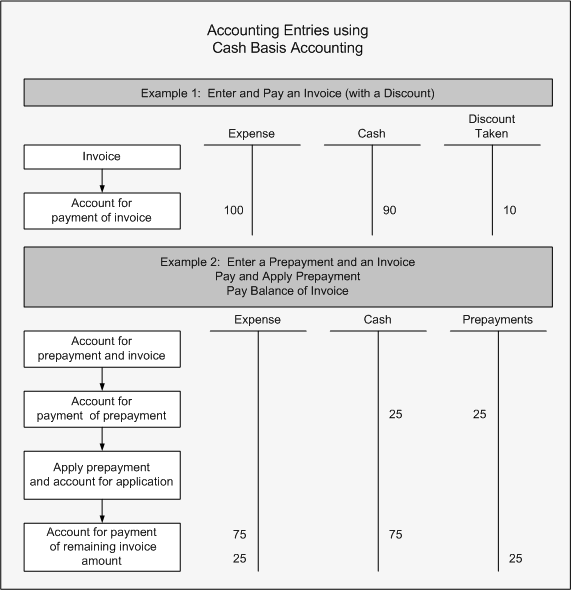
Cash Basis Accounting. You account only for payments, and do not record liability information for invoices. The payment accounting entries typically debit your expense or asset account and credit your cash or cash clearing account. When you create accounting entries, you might also create entries for discount taken and foreign currency exchange gain or loss.
The payment date is used as the accounting date for your expense and cash journal entries.
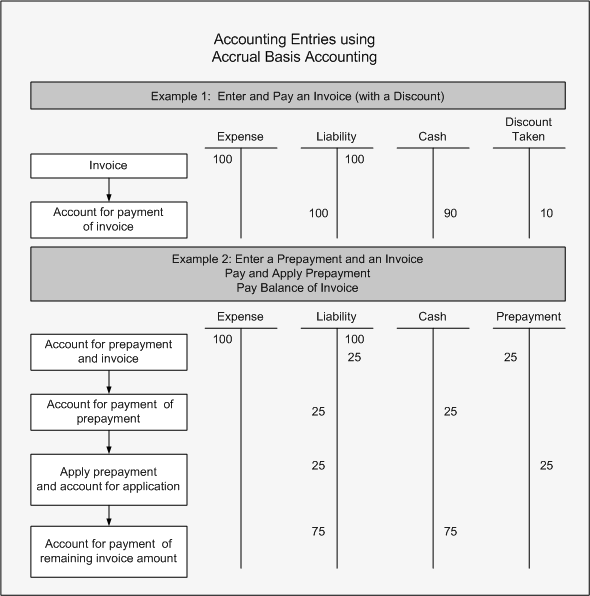
Accrual Basis Accounting. You create accounting entries for invoices and payments. The invoice accounting entries generally debit your expense or asset account and credit your liability account. For prepayments, accounting entries debit your prepayment account and credit your liability account. For prepayment applications, accounting entries debit your liability account and credit your prepayment account.
Payment accounting entries typically debit the liability account and credit the cash or cash clearing account. You might also create accounting entries for discount taken and foreign currency exchange gain or loss.
When you reconcile payments using Oracle Cash Management, the system might also create accounting entries for cash clearing, bank charges, bank errors, and foreign currency exchange gain or loss between payment and reconciliation time.
Combined Basis Accounting. You maintain one ledger for cash accounting and one ledger for accrual accounting. You choose which will be your primary and your secondary ledger. Invoice accounting entries are recorded for your accrual ledger, and payment accounting entries are recorded in both your cash ledger and accrual ledger.
Combined basis accounting allows you to produce financial reports for either your cash or accrual ledger. For example, you may want to manage your company on an accrual basis, but require cash basis accounting information for certain regulatory reporting on a periodic basis.
In the following examples, US Dollars is the ledger currency for your ledger and you use accrual basis accounting. You account for payments at issue time only.
Example 1
You enter and validate an invoice for $100 with payment terms that allow you to take a 10% discount on the invoice if paid within 10 days. When Subledger Accounting creates accounting entries for the invoice, it debits the expense account and credits the liability account.
You pay the invoice five days later, taking the 10% discount. When Subledger Accounting creates accounting entries, it records the liability and cash transactions along with the appropriate discount transaction.
Example 2
You enter and validate a $25 prepayment for a supplier site. You then enter and validate a $100 invoice for the same supplier site. When you account for the prepayment and invoice, Subledger Accounting records the expense and liability transactions for the invoices.
You then pay the prepayment and apply the prepayment to the invoice, reducing the amount due on the invoice. You pay the remaining amount of the invoice and create accounting entries for the prepayment application and the invoice. The prepayment application accounting entry debits the liability account for the amount of the prepayment and credits your prepayment account. The invoice payment accounting entry debits your liability account for the reduced invoice amount and credits your cash account.
In the following examples, US dollars is the ledger currency for your ledger and you use cash basis accounting. You account for payments at issue time only.
Example 1You enter and validate an invoice for $100 with payment terms that allow you to take a 10% discount on the invoice if paid within 10 days. Subledger Accounting creates no accounting entries for the invoice.
You pay the invoice five days later, taking the 10% discount. When Subledger Accounting creates accounting entries, it records the expense and cash transactions along with the appropriate discount transaction.
Example 2You enter and validate a $25 prepayment for a supplier site. You then enter and validate a $100 invoice for the same supplier site. Subledger Accounting records no accounting entries for the prepayment and invoice.
You then pay the prepayment and apply the prepayment to the invoice, reducing the amount due on the invoice. You pay the remaining amount of the invoice and create payment accounting entries. The accounting entry prepayment application debits the expense account and credits the prepayment account for the amount of the prepayment. The payment accounting entry debits your expense account and credits your cash account for the reduced invoice amount.
Other Sources
Oracle Cash Management User's Guide
