You can enter and post encumbrances in any open, future-enterable, or never-opened period in General Ledger. Therefore, you enter a Latest Encumbrance Year in a ledger to indicate how far into the future you can enter encumbrances for budgetary control.
The system uses the Latest Encumbrance Year when you use a Project boundary. When you check available funds using a project boundary, the system selects balance amounts as of the end of the current project. For budgets, this is the budget at the end of the last period in the latest open budget. For actuals, the system uses balance amounts at the end of the last opened period. For encumbrances, the system uses encumbrances as of the end of the latest encumbrance year since the system considers the end of the Latest Encumbrance Year to be the end of the project period.
Attention: When entering transactions in General Ledger using encumbrance accounting, you must enter a GL Date in a period that precedes the end of the latest encumbrance year. General Ledger prohibits you from entering a GL Date in a period after the latest open encumbrance year.
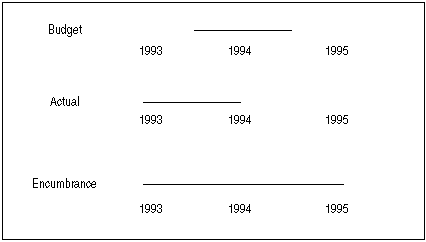
In the figure below assume that a budget is open and spans June 1993 to May 1994. The Fiscal Year is January 1993 to December 1993. You specify the Latest Encumbrance Year of 1994, which includes January 1994 to December 1994. When you check funds on a project-to-date basis against the project budget, the system uses the budgeted amount as of the end of the budget (May 31, 1994), the actuals balance as of the end of the fiscal year (December 31, 1993), and encumbrances as of the end of the latest encumbrance year (December 31, 1994).