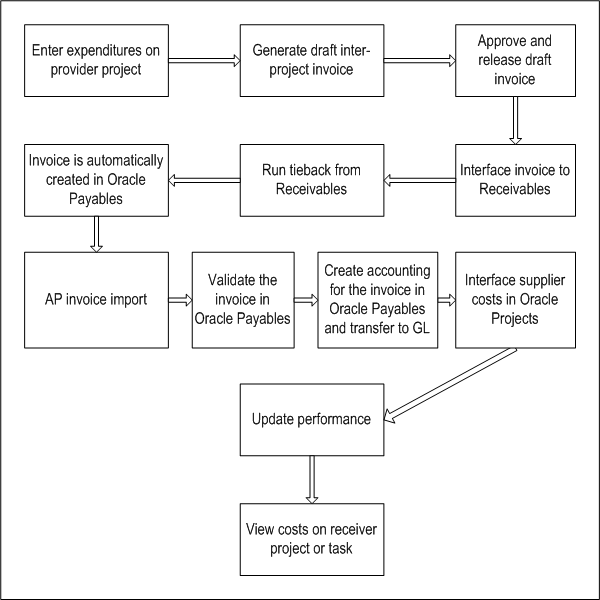
The processing flow for inter-project billing as detailed in the following diagram is the same as for any contract project, with the following exception: After you interface draft inter-project billing invoices to Oracle Receivables, the tieback process copies them into the Payables system of the receiver operating unit.
Processing Flow
The inter-project billing processing flow consists of the following steps:
Enter transactions and distribute costs on your provider project.
Generate a draft inter-project invoice by running the Generate Draft Invoice process. See: Generate Draft Invoices.
Approve and release the draft inter-project invoice.
Review, approve, and release the draft inter-project invoice using the standard functionality of Oracle Project Billing.
Interface the draft inter-project invoice to Oracle Receivables.
Interface the draft inter-project invoice to Oracle Payables.
Interface the draft inter-project invoice to Oracle Projects.
To record work performed by a provider resource, expenditures are entered in the provider project. The expenditures are charged to the receiver project and tasks. The expenditure organization is the resource owning organization. The expenditure type can be any type that is defined in the provider project. When the expenditure is interfaced to the receiver project via a Payables invoice, the expenditure type and expenditure organization are overridden by the Provider Controls defined in the receiver's operating unit.
You submit a streamline process (choose the XI: Interface Draft Invoice to AR parameter) to execute the processes Interface Invoices to Receivables, AutoInvoice, and Tieback Invoices from Receivables.
Inter-project invoices are interfaced to Oracle Receivables with the invoice batch source "PA Internal Invoices." Inter-project invoices and intercompany invoices share this batch source. (See: Interface Intercompany Invoices to Receivables) The streamline process executes AutoInvoice twice, once for inter-project invoices and once for customer invoices. The tieback process automatically interfaces the inter-project invoices to the receiver operating unit's payables.
You can also execute each of these processes separately. To generate invoices in Oracle Receivables for both inter-project invoices and customer invoices, you must run AutoInvoice twice, identifying the appropriate batch source each time.
When the provider operating unit runs the Tieback Invoices from Receivables process, the successfully interfaced inter-project invoices are automatically interfaced to the interface table of the receiver operating unit's Oracle Payables. Inter-project invoices interfaced to Oracle Payables have the following attributes:
Source. All inter-project invoices have the source "Inter-Project Invoices."
Supplier. The supplier is identified by the provider operating unit's internal billing implementation options.
Supplier Site. The supplier site is identified by the provider operating unit's internal receiver controls.
Invoice Amount. The Payables default invoice amount is the amount of the related Receivables invoice, including taxes.
The interface process populates the following project-related attributes for inter-project Payables invoice distributions as indicated below:
Project Number. The number of the receiver project is derived from the receiver task number linked to the provider project customer.
Task Number. The number of the receiver task linked to the internal project customer.
Expenditure Item Date. The invoice date of the inter-project Receivables invoice.
Expenditure Type. The expenditure type specified by the receiver operating unit in the Internal Receiver Controls tab.
Expenditure Organization. The expenditure organization specified by the receiver operating unit in the Internal Receiver Controls tab.
In addition, the interface process matches the tax code from each invoice line of the Receivables invoice to the appropriate Payables tax code and populates it in the Payables invoice distribution. This process indicates that the Payables invoice distributions do not include tax amounts, so that the Payables Open Interface process creates the tax lines for the entire invoice by grouping the tax lines based on the following attributes:
Tax code
Project information (project, task, expenditure item date, expenditure type, expenditure organization)
Note: Tax group support in Oracle Payables is provided only by the Canadian or other localizations.
The following table shows the expenditure attributes for an Inter-Project billing method:
| Billing Method | Work Breakdown Structure | Expenditure Type | Expenditure Organization | Quantity |
|---|---|---|---|---|
| Inter-Project | Project: Receiver Task: Receiver | Receiver Controls | Receiver Controls | 1 |
The receiver operating unit runs the Payables Open Interface Import process to create inter-project Payables invoices from the records in the interface table. Payables Invoice Import does the following:
Converts amounts from the transaction currency to the functional currency of the receiver operating unit based on the default conversion attributes defined in the receiver operating unit's Payables system options. (The Receivables invoice amounts are copied as the transaction currency amounts on the Payables invoice.)
You can customize the Payables Open Interface Workflow process to override the default currency conversion attributes for the invoice and distribution amounts.
Derives the internal Payables account from supplier information. You can either associate supplier types for internal suppliers with internal cost accounts or otherwise modify the Workflow-based account generation process to determine the appropriate intercompany cost account.
Generates recoverable and non-recoverable tax lines (if you have specified a percentage for recoverable tax amounts) based on the tax codes interfaced from Oracle Receivables.
Oracle Payables uses the rounding accounts specified in the Oracle Payables system options to account for discrepancies due to rounding tax amounts.
You must interface the entire inter-project Payables invoice (and related tax lines) created by the Payables Invoice Import process to the receiver operating unit's Oracle Projects system. To do this, run the process PRC: Interface Supplier Costs, which identifies inter-project invoices as those invoices with an invoice source of Inter-Project Invoice.