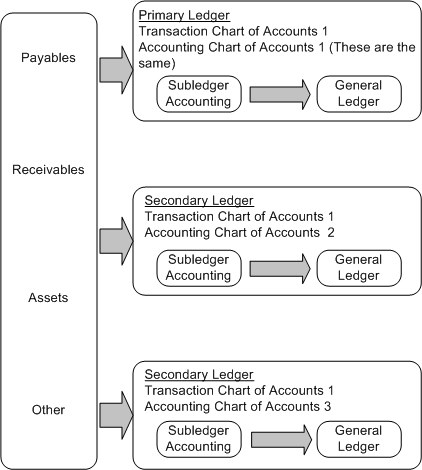
Assign each subledger accounting method to many ledgers. The combination of a subledger accounting method and ledger is called an accounting representation. The primary ledger reflects the primary accounting representation. In the primary ledger, the transaction and accounting charts of accounts are always the same.
Create multiple accounting representations by using secondary ledgers. Due to regulatory or other requirements, the accounting for these ledgers can be different than the accounting for the primary ledger. Each of these ledgers can have a different subledger accounting method assigned to it and is a secondary accounting representation. Create several secondary representations, each with a different currency, chart of accounts, calendar, and set of accounting definitions. An example of multiple accounting representations is described in the figure below.
Multiple Accounting Representations
To illustrate the difference between the two charts of accounts, consider a data entry clerk in a French firm who is creating payables invoices in Payables. This individual creates transactions using the charts of accounts from the French primary ledger. The transactions are then used to create accounting events for accounting. The account code combination used during data entry is from the transaction chart of accounts. For the purposes of the illustration, this chart of accounts has a six segment structure:
Company
Department
Cost Center
Account
Product
Sub-Product
Assume that French local requirements include a statutorily mandated Reporting Chart of Accounts for financial reporting. In most environments, both transaction entry and accounting representation is done in the context of a single ledger. It is normal to create the accounting for this transaction using the same chart of accounts as that used for transaction entry. The Reporting Chart of Accounts is used for both transaction and accounting charts of accounts. These two charts of accounts are always the same in the primary ledger.
In addition to the Reporting Chart of Accounts, assume that the firm requires a detailed Management Chart of Accounts for analytical purposes. This Management Chart of Accounts has a four segment structure:
Company
Department
Cost Center
Account
Using the AMB, the firm can create accounting for a secondary representation in a secondary ledger, which is based on a different currency, chart of accounts, calendar, and set of accounting definitions.
In this example, it is assumed that the firm's management requires a different chart of accounts for analytical purposes. This is a secondary representation and uses the Management Chart of Accounts. When accounts and journal entries are created using the AMB, they are created for the accounting chart of accounts. The creation of all journal entries by Subledger Accounting in the secondary ledger is therefore done in the context of this Management Chart of Accounts.