You define the cost buildup using a burden structure. A burden structure determines how cost bases are grouped and establishes the method of applying burden costs to raw costs. Expenditure types classify raw costs, and burden cost codes classify burden costs. The relationship between expenditure types and burden cost codes within cost bases determines what burden costs are applied to specific raw costs, and the order in which they are applied.
Note: To account for burden cost codes separately, you also define unique expenditure types to link to burden cost codes. See: Storing, Accounting, and Viewing Burden Costs.
Your company may have several different burden structures for unique business requirements. For example, you may use a different structure for internal costing than you use for government billing.
Note: If you change your burden structure and subsequently transfer an expenditure item burdened with the old structure, then the reversed amount and the amount charged to the new task each equals the original burdened amount.
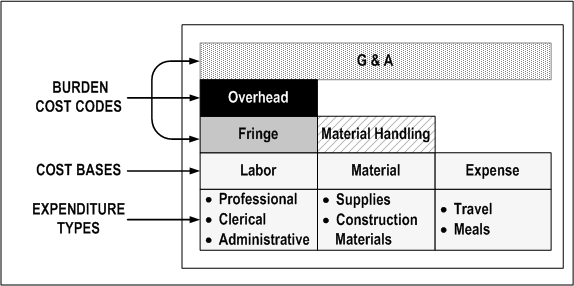
The following illustration shows the components of a burden structure.
Components of a Burden Structure
The illustration Components of a Burden Structure shows a burden structure with the following cost bases:
The Labor cost base:
includes the expenditure types Professional, Clerical, and Administrative.
is assigned the burden cost codes Fringe, Overhead, and General and Administrative (G&A).
The Material cost base:
includes the expenditure types Supplies and Construction Materials.
is assigned the burden cost codes Material Handling and General and Administrative (G&A).
The Expense cost base:
includes the expenditure types Travel and Meals.
is assigned the burden cost code General and Administrative (G&A).
Other Sources
Burden Structures, Oracle Projects Implementation Guide