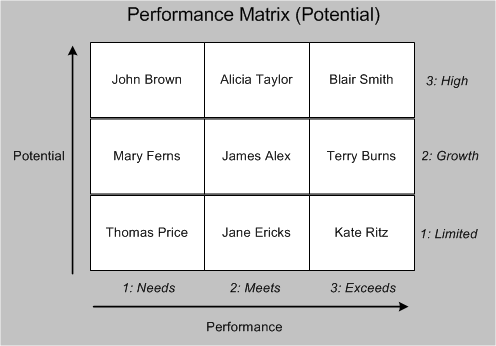
Oracle Succession Planning's performance matrixes: Performance Matrix (Potential) and Performance Matrix (Retention), provide insight into the depth and breadth of the talent pool in the enterprise.
Important: Oracle Succession Planning uses default templates to display nine box matrixes. For more information, see Using the Default Nine Box Matrix Templates to Assess Workforce. If your enterprise has implemented and configured the steps to use the default templates, then you can view the talent matrixes. Otherwise, the application provides an option to download PDF reports of the talent matrixes instead of displaying them.
The Performance Matrix (Potential) enables enterprises to assess their workforce talent and evaluate the talent pool. As a manager, you can use this matrix to assess performance and leadership potential for effective succession planning.
The Performance Matrix (Potential) page displays information for all the direct reports of a manager in the supervisor hierarchy. You have the flexibility to view the performance matrix for required workers. You can zoom in and zoom out as required.
Performance Matrix (Potential) is divided into nine boxes. Each box represents the level or scale of performance and potential.
Note: The performance and potential rating scales that you view on the matrix are configurable and depend on the ratings scales defined by the enterprise.
Assess Performance
Use the horizontal x-axis to assess the performance of workers. The matrix plots performance on a scale of 1 to 3.
Assess Potential
Use the vertical y-axis to assess the potential of workers. The matrix plots potential on a scale of 1 to 3.
A combination of x and y axes makes up the box within the grid that workers are placed on.
Typically, workers in the top right box will be the high performers with the greatest potential, and those in the bottom left box will be the lowest performers with the least potential. The other boxes will display workers who are performing and displaying potential to varying degrees.
Performance Matrix (Potential) uses information from the following products to assess performance and potential:
Performance
If your enterprise uses Oracle Performance Management, then the application derives the Performance value from the Overrall Rating field on the Give Final Ratings: Main Appraiser page of the Appraisals function. Otherwise, the Performance value is derived from the Performance window in Oracle HRMS.
Potential
If your enterprise uses Oracle Performance Management, then the application derives the Potential value from the Readiness Level field in the Advancement Potential region on the Give Final Ratings: Main Appraiser page of the Appraisals function. Otherwise, the Potential value is derived from the Succession Potential field in the Employee Succession Planning Information EIT or Employee Succession Management Information page.
This diagram shows the Performance Matrix (Potential) for workers who report to Steven Bird, starting with Blair Smith who is placed on the Exceeds Performance/High Potential grid
This examples uses the following rating scales:
Performance
1: Needs
Indicates that the performance is significantly below the required level.
2: Meets
Indicates that the performance is good and in-line with job requirements.
3: Exceeds
Indicates that the worker has exceeded the required level of performance.
Potential
1: Limited
Indicates that the worker shows little or no potential to move to the next work level.
2: Growth
Indicates that the worker shows potential to advance to the next or higher work level.
3: High
Indicates that the worker has requisite skills and expertise and exhibits leadership qualities.
The following section describes where some of the workers are placed in the Performance Matrix (Potential):
Blair Smith
Indicates that Blair exceeds the required performance level and has high potential.
Terry Burns
Indicates that Terry exceeds the required performance level and has moderate growth potential.
Kate Ritz
Indicates that Kate exceeds the required performance level and has limited potential.
Based on the analysis of the performance and potential of workers, Steven Bird can plan relevant career and succession planning actions. For example, Steve can allocate critical assignments to Blair Smith who is a high performer and has high potential. Performance improvement action plans can be implemented for average performers.
The Performance Matrix (Potential):
Provides performance and potential details of the workforce in a clear and intuitive manner.
Helps managers to determine the potential and job fit of workers.
Helps enterprises identify potential internal top performers for future positions.
Facilitates managers to make informed decision about career and succession planning for their workers.
Employee retention, especially of the best and top performing workers is a key challenge that enterprises face. Turnover costs can significantly affect the financial performance of enterprises. Direct costs include recruitment, selection, and training of new people. High turnover can increase workload and overtime expenses for coworkers. For an enterprise to develop a retention strategy for their talented workforce and use it for succession planning, they must assess the retention prospects of their workforce along with their performance.
Managers require tools to:
Examine the number of workers who will continue to remain in the enterprise or likely to move out of the enterprise.
Analyze the connection between performance and retention prospects.
Performance Matrix (Retention) enables enterprises to assess their workforce performance and prospects of retention of workers. This matrix provides managers a visual representation of who their top talent is and who is likely to leave the enterprise. This information is vital for effective succession planning.
Performance Matrix (Retention) uses information from the following products to assess performance and potential:
Performance
If your enterprise uses Oracle Performance Management, then the application derives the Performance value from the Overrall Rating field on the Give Final Ratings: Main Appraiser page of the Appraisals function. Otherwise, the Performance value is derived from the Performance window in Oracle HRMS.
Retention
If your enterprise uses Oracle Performance Management, then the application derives the Retention value from the Retention Level field in the Advancement Potential region on the Give Final Ratings: Main Appraiser page of the Appraisals function. Otherwise, the Retention value is derived from the Retention Potential field in the Employee Succession Planning Information EIT or Employee Succession Management Information page
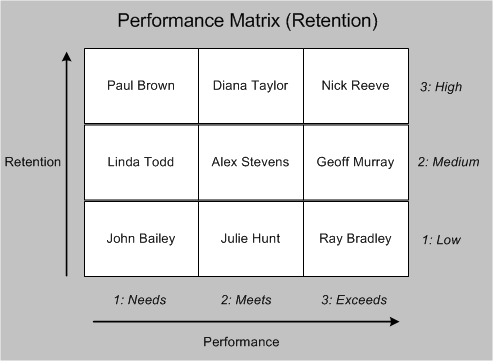
Performance Matrix (Retention) is divided into nine boxes. Each box represents the level or scale of performance and retention.
Note: The performance and retention rating scales that you view on the matrix are configurable and depend on the ratings scales defined by the enterprise.
Assess Performance
Use the horizontal x-axis to assess the performance of workers. The matrix plots performance on a scale of 1 to 3.
Assess Retention
Use the vertical y-axis to understand the retention prospect of workers. The matrix plots retention on a scale of 1 to 3.
A combination of x and y axes makes up the box within the grid that workers are placed on.
Typically, workers in the top right box will be the high performers with a high prospect of retention, and those in the bottom left box will be the lowest performers with low retention prospects. The other boxes will display workers who are performing and have retention prospects to varying degrees.
This diagram shows the Performance Matrix (Retention) for workers who report to Mike Connors starting with Nick Reeve who is placed on the Exceeds Performance/High Retention grid
This examples uses the following rating scales:
Performance
1: Needs
Indicates that the performance is significantly below the required level.
2: Meets
Indicates that the performance is good and in-line with job requirements.
3: Exceeds
Indicates that the worker has exceeded the required level of performance.
Retention
1: Low
Indicates that the risk of losing the worker is high.
2: Medium
Indicates that the risk of losing the worker is moderate.
3: High
Indicates that the risk of losing the worker is minimal.
The following section describes where some of the workers are placed in the Performance Matrix (Retention):
Nick Reeve
Indicates that Nick is a high performer and has high retention prospects.
Geoff Murray
Indicates that Geoff is a high performer and has moderate retention prospects.
Ray Bradley
Indicates that Ray is a high performer and has low retention prospects.
Based on the analysis of the performance and retention prospects of workers in his hierarchy, Mike Connors can plan relevant career and succession planning actions. For example, Mike can allocate critical assignments to Nick Reeve who is a high performer and has high retention potential. Enterprises can implement workforce retention strategies such as plan succession options, create better reward systems, and increase employee engagement to retain good performers with low retention prospects.
The Performance Matrix (Retention):
Provides details of performance and retention prospects of the workforce in a clear and intuitive manner.
Helps enterprises to identify potential internal top performers who have high retention prospect for future positions.
Facilitates analysis of retention and turnover strategies of the enterprise. For example, managers can use the matrix information and develop retention strategies and reward systems that increase employee involvement, and promote development, recognition, and advancement of the workforce.